
On this page 89 sections
- Short answer: is Marrakech worth visiting?
- What kind of city is Marrakech?
- How many days do you need in Marrakech?
- 1 day in Marrakech
- 2 days in Marrakech
- 3 days in Marrakech
- 4 days in Marrakech
- 5 or more days in Marrakech
- Best things to do in Marrakech
- Jemaa el-Fna
- Marrakech medina
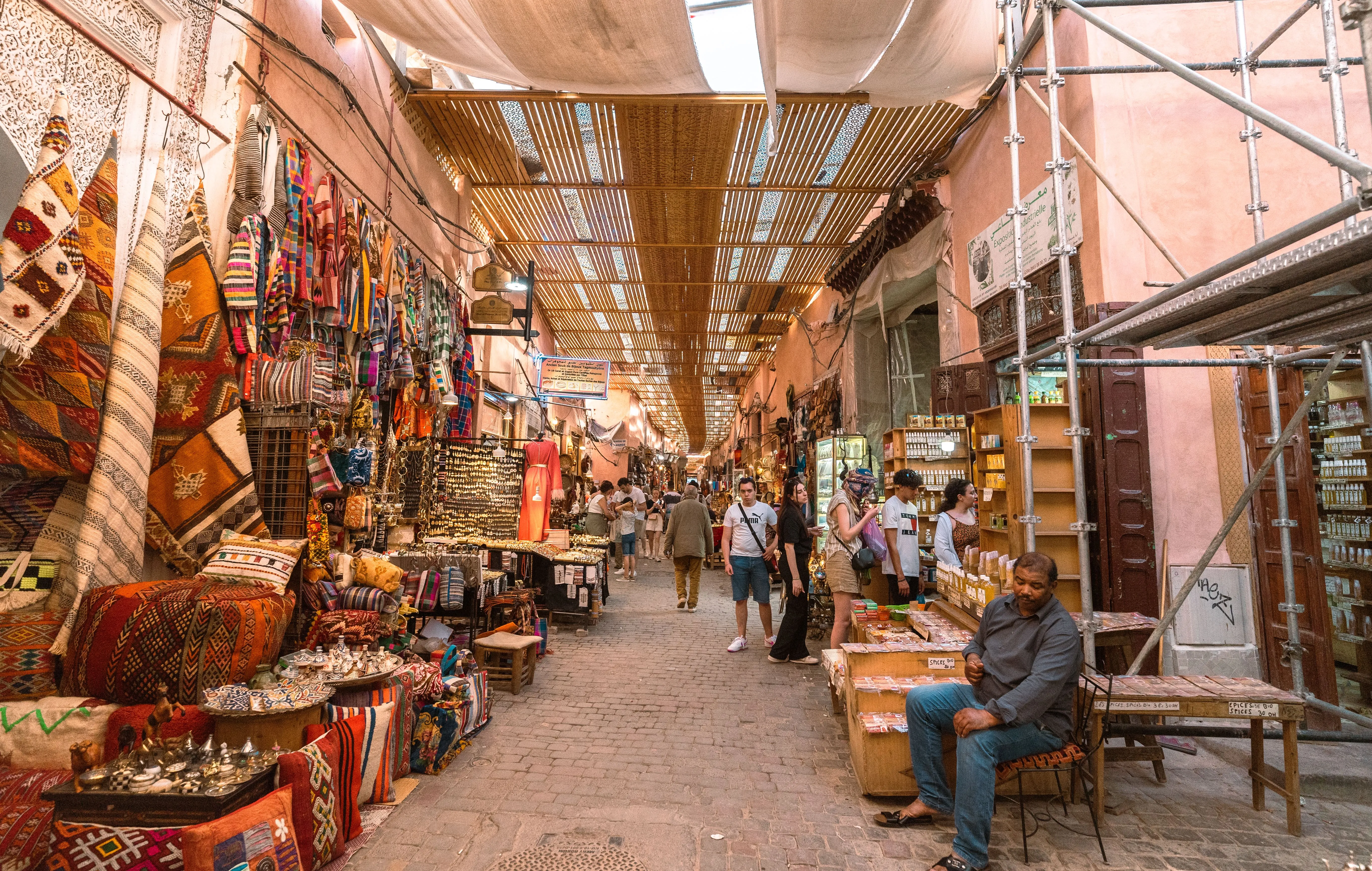
- The souks
- Koutoubia Mosque
- Bahia Palace
- Ben Youssef Madrasa
- Jardin Majorelle
- Le Jardin Secret
- Saadian Tombs
- El Badi Palace
- Dar El Bacha and museums
- Rooftop cafés
- Hammam experience
- Food tour or cooking class
- Gueliz
- Where to stay in Marrakech
- Medina
- Gueliz
- Hivernage
- Kasbah
- Palmeraie
- Medina or Gueliz: which is better?
- Is Marrakech safe for tourists?
- Marrakech taxis and getting around
- Airport arrival
- Petit taxis
- Walking in Marrakech
- Getting around the medina
- Marrakech medina and souks: how to handle them
- Do not follow strangers
- Ask prices first
- Keep refusals short
- Take breaks
- Do not shop under pressure
- What to eat in Marrakech
- Tajine
- Couscous
- Tanjia
- Harira
- Msemen and harcha
- Mint tea
- Fresh juice
- Rooftop restaurants
- Food safety basics
- Best day trips from Marrakech
- Essaouira
- Atlas Mountains
- Ourika Valley
- Agafay Desert
- Ouzoud Waterfalls
- Ait Ben Haddou and Ouarzazate
- Sahara Desert
- Best time to visit Marrakech
- Marrakech travel budget
- What to wear in Marrakech
- Is Marrakech good for families?
- Is Marrakech good for solo travelers?
- Common Marrakech scams and tourist pressure
- “The road is closed”
- “I will show you the way”
- Taxi overcharging
- Animal photo pressure
- Henna pressure
- Shop pressure
- What to avoid in Marrakech
- Common mistakes first-time visitors make
- Staying too deep in the medina without understanding access
- Trying to see everything
- Visiting in summer without adjusting the plan
- Saying yes to unwanted help
- Shopping on the first day
- Staying only in Marrakech
- Booking the Sahara too casually
- Simple Marrakech itinerary for first-time visitors
- Day 1: Arrival and first medina walk
- Day 2: Historic Marrakech
- Day 3: Gardens, hammam, or food experience
- Day 4: Day trip or slow Marrakech
- Final recommendation
- FAQ
Marrakech is worth visiting, especially for first-time visitors who want riads, souks, gardens, food, architecture, hammams, rooftop views, and easy day trips. But it is also one of Morocco’s most intense cities. Most travelers should spend 2 to 4 days in Marrakech, stay in the right area, plan their medina arrival carefully, ask prices first, and balance the city with a calmer destination if possible.
| Is Marrakech worth visiting? | Yes, especially for riads, souks, gardens, food, architecture, and day trips. |
|---|---|
| Best trip length | 2 to 4 days. Three days is the best balance for most first-time visitors. |
| Best area for atmosphere | The medina, especially if you want a traditional riad experience. |
| Best area for easier access | Gueliz or Hivernage. |
| Is Marrakech safe? | Generally safe for tourists, but prepare for taxi issues, tourist pressure, and medina confusion. |
| Best time to visit | Spring and autumn, especially April, May, September, October, and November. |
| Hardest months | July and August because of strong heat. |
| Biggest mistake | Trying to see everything too quickly and underestimating the medina. |
- Is Marrakech worth visiting?
- Yes, especially for riads, souks, gardens, food, architecture, and day trips.
- Best trip length
- 2 to 4 days. Three days is the best balance for most first-time visitors.
- Best area for atmosphere
- The medina, especially if you want a traditional riad experience.
- Best area for easier access
- Gueliz or Hivernage.
- Is Marrakech safe?
- Generally safe for tourists, but prepare for taxi issues, tourist pressure, and medina confusion.
- Best time to visit
- Spring and autumn, especially April, May, September, October, and November.
- Hardest months
- July and August because of strong heat.
- Biggest mistake
- Trying to see everything too quickly and underestimating the medina.
Marrakech is one of the most famous cities in Morocco, and for many travelers, it is their first real image of the country.
It has riads, souks, gardens, rooftop cafés, palaces, hammams, traditional food, red walls, busy squares, and easy access to day trips. It can be beautiful, memorable, and full of atmosphere.
But Marrakech can also feel intense.
The medina is busy. Taxis need attention. Sellers can be persistent. Some streets are confusing. Tourist pressure is real. And if you visit in the wrong season or plan too much in one day, the city can feel tiring quickly.
So the honest answer is simple: Marrakech is worth visiting, but it is much better when you understand how it works before you arrive.
Short answer: is Marrakech worth visiting?
Yes, Marrakech is worth visiting, especially for first-time visitors who want a strong introduction to Morocco.
It is one of the best cities for riads, souks, gardens, architecture, food, hammams, rooftop views, and easy day trips. It is also one of the most convenient bases in Morocco because it has an international airport, many hotels, many tours, and strong tourism infrastructure.
But Marrakech is not the calmest city in Morocco. It can feel overwhelming if you arrive tired, stay deep in the medina without directions, walk all day in the heat, or say yes to everyone offering help.
For most first-time visitors, 2 to 4 days in Marrakech is enough. Three days is usually the best balance.
What kind of city is Marrakech?
Marrakech is a mix of old and new Morocco.
The old medina is where many travelers imagine Marrakech: narrow streets, souks, riads, traditional doors, small shops, food stalls, historic sites, and Jemaa el-Fna. This is the most atmospheric part of the city, but also the most intense.
Outside the medina, Marrakech also has modern areas like Gueliz and Hivernage, with wider roads, restaurants, cafés, shops, hotels, and easier taxi access.
This is important because your Marrakech experience depends heavily on where you stay and how you move.
A traveler staying in a quiet riad inside the medina will experience a different Marrakech from someone staying in Gueliz or Hivernage. Neither is wrong. They are just different versions of the city.
How many days do you need in Marrakech?
Most first-time visitors need 2 to 4 days in Marrakech.
You can see the main highlights in two days, but three days gives you a better rhythm. Four days is useful if you want a hammam, shopping time, a cooking class, or a day trip.
1 day in Marrakech
One day is very short, but it can work if Marrakech is only a quick stop.
Focus on:
- Jemaa el-Fna
- the medina
- one major palace or garden
- a rooftop meal or tea
- a short walk in the souks
Do not try to see everything. Marrakech rewards slow movement more than checklist travel.
2 days in Marrakech
Two days is enough for a good first taste.
You can visit the medina, Jemaa el-Fna, Koutoubia area, Bahia Palace, the souks, and one garden or museum. You can also add a hammam or a rooftop dinner if you plan well.
This is a good option if your wider Morocco trip includes Fes, Essaouira, the Atlas Mountains, or the Sahara.
3 days in Marrakech
Three days is the best amount of time for most first-time visitors.
It gives you time to see the main sights, get used to the medina, take breaks, enjoy food, and avoid rushing. You can also include one slower experience, like a hammam, cooking class, or guided medina walk.
If this is your first trip to Morocco, three days in Marrakech is usually enough before moving somewhere calmer.
4 days in Marrakech
Four days works well if you want Marrakech plus a nearby day trip.
Good options include:
- Agafay Desert
- Atlas Mountains
- Ourika Valley
- Essaouira
- Ouzoud Waterfalls
Four days also works if you want a slower, more comfortable city stay with time for shopping, cafés, and rest.
5 or more days in Marrakech
Five or more days is better if you are using Marrakech as a base, not only staying inside the city.
You can enjoy Marrakech slowly and add day trips. But if you only stay inside the medina for five days, the city may start to feel repetitive or tiring.
For many travelers, it is better to spend three days in Marrakech and add Essaouira, the Atlas Mountains, Fes, or another destination.
Best things to do in Marrakech
Marrakech has many famous sights, but you do not need to visit everything. The best trip mixes historic places, wandering, food, rest, and one or two experiences that match your style.
Jemaa el-Fna
Jemaa el-Fna is the main square of Marrakech and one of the city’s most famous places.
It changes throughout the day. In the morning and afternoon, it can feel more open and manageable. In the evening, it becomes louder, busier, and more intense with food stalls, performers, crowds, sellers, and movement.
You should see it, but you do not need to spend hours there.
Be careful with photos, especially with performers, animals, or people who expect money. If you take a photo or accept interaction, payment may be expected.
Marrakech medina
The medina is the old city and the heart of the classic Marrakech experience.
This is where you find riads, souks, traditional streets, small cafés, historic buildings, and many of the city’s most atmospheric corners.
But the medina can also be confusing. Some streets are narrow. Some areas look similar. Cars cannot enter many parts. Motorbikes pass through small alleys. People may offer directions and expect money.
The best way to enjoy the medina is to explore slowly, avoid following strangers, and take breaks when it becomes too much.
The souks
The souks are Marrakech’s traditional market areas. You can find leather goods, rugs, lamps, ceramics, spices, baskets, clothing, metalwork, woodwork, and many souvenirs.
The souks are beautiful, but they can also feel intense.
Do not shop seriously on your first hour in Marrakech. Walk first. Compare prices. Learn the atmosphere. If you want to buy something expensive, do not rush.
Negotiation is normal in many souk situations, but not everywhere. Some modern shops have fixed prices. If the price feels wrong, you can politely walk away.
Koutoubia Mosque
Koutoubia Mosque is one of Marrakech’s main landmarks. Non-Muslims cannot enter the mosque, but the exterior and surrounding area are still worth seeing.
It is useful as a visual reference point near the medina and Jemaa el-Fna. The minaret is one of the symbols of the city.
This is a good place to pass during a first walk around central Marrakech.
Bahia Palace
Bahia Palace is one of the best historic places to visit in Marrakech.
It is known for courtyards, carved details, painted ceilings, tilework, and traditional Moroccan design. It is also one of the easier sights to include in a first-time itinerary.
Go earlier in the day if you want a calmer visit, especially in busy seasons.
Ben Youssef Madrasa
Ben Youssef Madrasa is one of the most beautiful historic buildings in Marrakech.
It is known for detailed tilework, carved plaster, cedarwood, and a peaceful courtyard. It is a strong choice if you like architecture and photography.
This is one of the places where visitors often understand how refined Moroccan craftsmanship can be.
Jardin Majorelle
Jardin Majorelle is one of Marrakech’s most famous attractions.
It is known for its bold blue color, plants, pathways, and connection to Yves Saint Laurent. It is popular, so it can be busy.
Book ahead when needed, especially in busy periods. Go early or later in the day if you want a calmer experience.
Jardin Majorelle is beautiful, but it is also one of the more tourist-heavy attractions. It is worth visiting if it interests you, but do not make your whole Marrakech trip depend on one garden.
Le Jardin Secret
Le Jardin Secret is another garden inside the medina. It can feel calmer than some of the city’s most famous attractions, depending on the time of day.
It is a good stop if you want a break from the souks without leaving the medina.
Saadian Tombs
The Saadian Tombs are a historic site near the Kasbah area.
They are not a huge visit, but they are useful if you are already exploring that part of Marrakech. The decoration and history make them a worthwhile short stop for many visitors.
El Badi Palace
El Badi Palace is more ruined and open than Bahia Palace, but it has a strong atmosphere.
It is good for travelers who enjoy history, large spaces, old walls, and views. It may not feel as decorative as other sites, but it gives a different sense of Marrakech’s past.
Dar El Bacha and museums
Marrakech has several museums and restored historic buildings. Dar El Bacha is one of the popular stops for travelers interested in architecture, design, and calmer indoor spaces.
Museums are especially useful when the weather is hot or when you need a quieter break from the souks.
Rooftop cafés
Rooftop cafés are part of the Marrakech experience.
They are good for tea, sunset, views, and taking a break from the medina. But not every rooftop is special, and some are overpriced for what they offer.
Choose a few good ones instead of paying rooftop prices all day.
Hammam experience
A hammam can be one of the best experiences in Marrakech if you choose the right one.
There are local hammams and tourist hammams. Local hammams are more traditional and cheaper, but they can be confusing for first-time visitors. Tourist hammams are easier, more private, and more expensive.
For a first trip, a well-reviewed tourist hammam may be the easiest choice. If you want a local hammam, ask your accommodation how it works before going.
Food tour or cooking class
A food tour or cooking class can be useful if you want to understand Moroccan food beyond restaurant menus.
This is especially helpful in Marrakech because the food scene is mixed: local places, tourist restaurants, rooftops, hotel dining, street food, and modern Moroccan kitchens.
A good experience can help you eat better during the rest of your trip.
Gueliz
Gueliz is the modern part of Marrakech.
It has cafés, restaurants, shops, galleries, hotels, offices, and wider roads. It does not have the same atmosphere as the medina, but it can be a useful break.
If the medina feels too intense, spend an afternoon in Gueliz. It shows another side of the city.
Where to stay in Marrakech
Where you stay in Marrakech matters a lot.
The best area depends on whether you want atmosphere, convenience, calm, nightlife, luxury, or easy transport. Compare the Marrakech neighborhood options and arrival routes before choosing an address, then use our riad-versus-hotel guide to check the property itself.
Medina
The medina is best for first-time visitors who want atmosphere.
This is where many riads are located, and it gives you the classic Marrakech experience: old streets, traditional buildings, souks, small doors, courtyards, and walking access to many sights.
Choose the medina if you want:
- riad atmosphere
- walking access to historic areas
- souks and old streets
- a strong first Marrakech experience
- rooftop cafés and traditional surroundings
Be careful with:
- hard-to-find riads
- luggage access
- noise
- motorbikes in narrow streets
- late-night arrival
- taxis not reaching the door
If you stay in the medina, ask your riad exactly where the taxi should drop you. Do not arrive late at night without directions.
Gueliz
Gueliz is best for easier access and a more modern stay.
It is better if you want restaurants, cafés, taxis, shops, and less medina intensity. It is also useful if you want to sleep somewhere calmer while still visiting the medina by taxi.
Choose Gueliz if you want:
- easier transport
- modern cafés and restaurants
- less tourist pressure
- wider streets
- a more practical base
Gueliz is not as atmospheric as the medina, but it can be much easier for some travelers.
Hivernage
Hivernage is best for comfort, hotels, nightlife, and a more polished stay.
It is not the most traditional area, but it has many larger hotels and easier road access. It can work well for travelers who want comfort and convenience over medina atmosphere.
Choose Hivernage if you want:
- hotels rather than riads
- easier taxi access
- nightlife or restaurants
- more comfort
- a less chaotic base
Kasbah
The Kasbah area can be a good compromise.
It is near the medina and historic sites but can feel a bit more contained than some central medina areas. It works well for travelers who want atmosphere but not the most intense location.
Choose Kasbah if you want:
- medina access
- historic surroundings
- a slightly different base
- access to Saadian Tombs and nearby areas
Palmeraie
The Palmeraie is better for resorts, pools, privacy, and a quieter stay.
It is not ideal if you want to walk into the medina every day. You will depend more on taxis or transfers.
Choose Palmeraie if you want:
- resort style
- pool time
- quiet
- larger hotels or villas
- a slower stay outside the city center
Do not choose Palmeraie if your main goal is to explore the medina on foot.
Medina or Gueliz: which is better?
For a first-time visitor, the medina is better for atmosphere, and Gueliz is better for ease.
If you want the classic Marrakech feeling, stay in the medina. If you want less stress, easier taxis, and more modern comfort, stay in Gueliz.
A good compromise is to stay in a medina riad for two or three nights, then balance your trip with a calmer destination like Essaouira, the Atlas Mountains, or a hotel outside the old city.
Is Marrakech safe for tourists?
Marrakech is generally safe for tourists, especially in the main visitor areas.
Most travelers do not face serious problems. The more common issues are tourist pressure, taxi overcharging, fake guides, unclear prices, unwanted directions, and petty theft in crowded places.
Marrakech is not a city where you need to walk around scared. But you should stay aware.
Be more careful in:
- crowded souks
- Jemaa el-Fna
- taxi areas
- quiet medina alleys late at night
- places where people offer unsolicited directions
- shopping situations with pressure
- busy streets where your phone is visible
The best safety strategy is simple: ask prices first, avoid following strangers, keep valuables secure, and use trusted transport at night if you are unsure.
Marrakech taxis and getting around
Marrakech is easy in some ways and frustrating in others.
Inside the medina, you will walk a lot. Outside the medina, you will use taxis or transfers.
Airport arrival
Marrakech Menara Airport is close to the city, but your arrival can still feel stressful if you are not prepared.
Before you land, have:
- your accommodation name
- address saved offline
- phone number
- drop-off point
- some cash
- arrival instructions from your riad
- a plan if arriving late
Many medina riads are not reachable by car. The taxi may drop you at a nearby gate or square, then you walk the final part.
If it is your first time, a pre-arranged transfer can be worth it, especially at night.
Petit taxis
Petit taxis are used for city rides.
Some drivers use meters, and some may try to negotiate fixed prices, especially with tourists. Around tourist areas, taxi issues are common.
Before getting in, ask clearly:
“Meter?”
Or agree on the price first.
If the price feels too high, do not argue for ten minutes. Just walk away and ask another taxi.
Walking in Marrakech
You will walk a lot in Marrakech, especially in the medina.
Wear comfortable shoes. The ground can be uneven, and medina walking is slower than normal city walking.
In summer, avoid long walks during the hottest part of the day. Marrakech heat can make a short walk feel much longer.
Getting around the medina
Maps can help, but they are not perfect inside every medina street.
If you get lost, ask a shopkeeper, your riad, or a restaurant. Be careful with strangers who approach you and insist on showing the way.
If someone guides you without a clear agreement, they may expect money afterwards.
Marrakech medina and souks: how to handle them
The medina and souks are part of why Marrakech is famous, but they are also where many visitors feel overwhelmed.
Here is how to make them easier.
Do not follow strangers
One common situation is someone telling you:
- “This road is closed.”
- “The square is this way.”
- “Your riad is over there.”
- “The market is only today.”
- “I will show you.”
Sometimes people are genuinely helpful. But in tourist areas, unsolicited help often becomes a request for money or a route to a shop.
If you did not ask for help, keep walking.
Ask prices first
Before a taxi, guide, shop item, photo, service, or hammam, ask the price.
This prevents many problems.
Keep refusals short
You do not need a long explanation.
Say:
“No, thank you.”
Then continue walking.
Long debates usually create more pressure.
Take breaks
Marrakech is easier when you stop often.
Use rooftops, gardens, museums, and quiet cafés as breaks from the medina.
Do not shop under pressure
If a seller makes you feel uncomfortable, leave.
You can always come back later. You do not need to buy something because someone spent time showing it to you.
What to eat in Marrakech
Marrakech has a wide food range, from local meals to stylish restaurants.
Do not eat only in tourist restaurants. Some of the best value is in simple local places.
Tajine
Tajine is one of the classic Moroccan dishes. It is slow-cooked and can include chicken, beef, lamb, vegetables, prunes, olives, lemon, or other ingredients.
It is easy to find in Marrakech, but quality varies.
Couscous
Couscous is traditionally eaten on Fridays in many Moroccan homes, but restaurants may serve it more often.
If you want a more local experience, ask where to eat good Friday couscous.
Tanjia
Tanjia is strongly associated with Marrakech.
It is usually slow-cooked meat prepared in a clay pot. It is rich, simple, and local. If you eat meat, this is one of the Marrakech dishes worth trying.
Harira
Harira is a Moroccan soup often made with tomatoes, lentils, chickpeas, herbs, and sometimes meat.
It is especially common during Ramadan, but you can find it outside Ramadan too.
Msemen and harcha
Msemen and harcha are common Moroccan breakfast or snack foods.
Msemen is a layered flatbread. Harcha is a semolina bread. Both are good with honey, cheese, olive oil, or mint tea.
Mint tea
Mint tea is everywhere in Morocco.
In Marrakech, you can drink it in local cafés, riads, shops, rooftops, restaurants, and homes. Prices vary depending on where you are.
Fresh juice
Fresh orange juice is common in Marrakech, especially around busy tourist areas.
Check cleanliness and price before ordering.
Rooftop restaurants
Rooftop restaurants are popular in Marrakech and can be enjoyable, especially around sunset.
But they are usually more expensive than local restaurants. Choose them for atmosphere, not because they are always the best food.
Food safety basics
Most travelers can eat well in Marrakech, but use normal judgment.
Choose busy places, avoid food that looks like it has been sitting too long, drink bottled or filtered water if unsure, and be careful with raw foods if you have a sensitive stomach.
Best day trips from Marrakech
Marrakech is one of the best bases in Morocco for day trips.
But not all day trips are equal. Some are easy and realistic. Others are long and tiring.
Essaouira
Essaouira is one of the best trips from Marrakech, but it deserves at least one night if you have time.
It is calmer, coastal, walkable, and a good break from Marrakech intensity.
A day trip is possible, but it means several hours on the road. Staying overnight is better if your itinerary allows it.
Atlas Mountains
The Atlas Mountains are one of the best escapes from Marrakech.
They offer villages, valleys, views, cooler air in some seasons, hiking, and a different rhythm from the city.
Popular areas include Imlil and nearby valleys. If you want nature, this is one of the best additions to a Marrakech trip.
Ourika Valley
Ourika Valley is a popular day trip from Marrakech.
It is close enough for a simple escape, especially if you want mountain scenery without going too far. It can be busy, especially on weekends and popular periods.
Agafay Desert
Agafay is a rocky desert area close to Marrakech.
It is good for sunset dinners, pool camps, quad biking, camel rides, and a desert-style experience without driving all the way to the Sahara.
But it is not the Sahara. Do not book Agafay expecting golden dunes like Merzouga or Erg Chebbi.
Agafay is convenient. The Sahara is more dramatic but much farther.
Ouzoud Waterfalls
Ouzoud Waterfalls can be a good day trip, but it is a long one.
It is better for travelers who really want waterfalls and do not mind several hours on the road.
Check the transport plan carefully before booking.
Ait Ben Haddou and Ouarzazate
Ait Ben Haddou and Ouarzazate are possible from Marrakech, but they make a long day.
The route crosses the High Atlas, which can be beautiful but tiring. If you are continuing toward the desert, this route makes more sense as part of a multi-day trip.
For most first-time visitors, doing it as a day trip is possible but not relaxed. The Ait Ben Haddou travel guide covers the journey honestly, including how much time you need and whether an overnight stop makes sense.
Sahara Desert
The Sahara is not a normal day trip from Marrakech.
Real Sahara routes usually need at least two or three days, and even then, there is a lot of driving. If the Sahara is important to your trip, give it enough time.
Do not add the Sahara to a short Marrakech trip only because it looks good online. It can make the whole itinerary rushed.
Best time to visit Marrakech
The best time to visit Marrakech is spring or autumn.
April, May, September, October, and November are usually the easiest months for most visitors. The weather is better for walking, sightseeing, rooftop meals, gardens, and day trips.
July and August can be very hot. You can still visit, but you should slow down, avoid midday walking, and choose accommodation with air conditioning or a pool if possible.
Winter can be good if you dislike heat, but evenings and riads can feel cold. Bring layers.
Best overall months:
- April
- May
- September
- October
- November
Hardest months for heat:
- July
- August
Good for cooler city travel:
- December
- January
- February
Marrakech travel budget
Marrakech can be affordable or expensive depending on your choices.
You can spend modestly if you eat local food, stay in a simple riad, walk often, and avoid too many private tours. You can also spend quickly on rooftop restaurants, luxury riads, hammams, shopping, taxis, day trips, and premium experiences.
Common Marrakech costs include:
- accommodation
- airport transfer
- taxis
- paid attractions
- rooftop meals
- hammams
- shopping
- tips
- day trips
- guides
For most first-time visitors, Marrakech is not where you should be careless with money. Ask prices first and choose what matters.
Spend on a good location and experiences you truly want. Save on unclear taxis, rushed shopping, and restaurants that are expensive only because of the view.
What to wear in Marrakech
Marrakech is used to tourists, but it is still better to dress with local context in mind.
You do not need traditional Moroccan clothing. You just need comfortable, respectful clothes that work for heat, walking, and busy public areas.
Good choices include:
- loose trousers
- long skirts or dresses
- breathable shirts
- light layers
- comfortable walking shoes
- sunglasses
- hat in summer
- light jacket in winter evenings
In resort pools, beach-style clothing is normal. In medinas, souks, traditional neighborhoods, and religious areas, modest clothing is usually better.
Marrakech can be stylish, but it is also practical. Wear clothes you can actually walk in.
Is Marrakech good for families?
Yes, Marrakech can work for families, but the trip should be planned carefully.
Families should choose accommodation with easy access, avoid too many long medina walks, plan breaks, and be careful with heat.
Good family-friendly ideas include:
- gardens
- riads with pools
- short medina walks
- cooking classes
- easy day trips
- rooftop meals
- Atlas Mountains
- Agafay with a trusted operator
Families should be careful with:
- July and August heat
- deep medina riads with luggage
- crowded souks
- long day trips
- too many hotel changes
- late arrivals
A slower Marrakech trip is better for families.
Is Marrakech good for solo travelers?
Yes, Marrakech can be good for solo travelers, but it requires confidence and awareness.
Solo travelers should choose well-reviewed accommodation, stay in a convenient area, avoid isolated medina alleys late at night, and be firm with unwanted attention.
For solo female travelers, unwanted comments or attention can happen. This does not mean Marrakech is unsafe, but it can be tiring.
Good habits include:
- walking confidently
- avoiding long conversations with persistent strangers
- using trusted taxis at night
- dressing with local context in mind
- choosing a central riad or hotel
- not sharing too much personal information with strangers
Marrakech can be rewarding solo, but it is not the easiest city in Morocco if you are nervous about attention or pressure.
Common Marrakech scams and tourist pressure
Not every interaction in Marrakech is a scam. Many people are honest, helpful, and kind.
But tourist pressure exists, especially in the medina and around major attractions.
Common situations include:
“The road is closed”
Someone may tell you a street is closed and offer to take you another way.
Sometimes this is false and leads to a shop or a request for money.
“I will show you the way”
Unwanted directions can become paid directions.
If you need help, ask your riad, a shopkeeper, or use a trusted map.
Taxi overcharging
Some taxi drivers may refuse the meter or give a high tourist price.
Ask before entering.
Animal photo pressure
Around tourist areas, you may see animals used for photos. If you take a photo, money may be demanded.
It is better to avoid these interactions.
Henna pressure
Some visitors, especially women, report unwanted henna offers or unclear pricing.
Do not accept anything unless you clearly want it and know the price.
Shop pressure
A friendly shop visit can become a long sales situation.
If you do not want to buy, leave early and politely.
What to avoid in Marrakech
Avoid making Marrakech harder than it needs to be.
Avoid:
- entering taxis without price clarity
- following strangers in the medina
- arriving late at a hidden riad with no plan
- walking all afternoon in summer heat
- shopping under pressure
- photographing performers or animals without expecting payment
- carrying your phone loosely in crowds
- booking the cheapest tour without checking details
- spending every day only in the medina
- assuming Marrakech represents all of Morocco
Marrakech is better when you move calmly and make decisions clearly.
Common mistakes first-time visitors make
Staying too deep in the medina without understanding access
Some riads are beautiful but hard to reach.
If it is your first visit, check how close the riad is to a taxi drop-off point.
Trying to see everything
Marrakech is not best experienced as a checklist.
Choose fewer sights and leave time to sit, walk, eat, and rest.
Visiting in summer without adjusting the plan
July and August require a slower rhythm. Plan mornings and evenings, not long midday walks.
Saying yes to unwanted help
A polite “no, thank you” is enough.
Shopping on the first day
Wait until you understand prices and quality.
Staying only in Marrakech
Marrakech is important, but it is not all of Morocco.
Balance it with Essaouira, Fes, Rabat, the Atlas Mountains, Chefchaouen, the coast, or the desert if you have time.
Booking the Sahara too casually
The Sahara takes time. Do not treat it like a quick Marrakech activity.
Marrakech is real Morocco, but it is also tourist-heavy Morocco. It has beauty, history, business, pressure, hospitality, and performance all mixed together. The best way to enjoy it is not to romanticize it or fear it. Stay aware, ask prices first, take breaks from the medina, and remember that Marrakech is only one version of Morocco.
Simple Marrakech itinerary for first-time visitors
Day 1: Arrival and first medina walk
Keep the first day simple.
Arrive, check in, understand your riad location, and take a short walk around the medina or Jemaa el-Fna.
Do not plan too much for your first evening. The city can feel intense when you are tired.
Good first-day ideas:
- short medina walk
- Koutoubia exterior
- rooftop tea
- simple dinner
- early night
Day 2: Historic Marrakech
Use your second day for major sights.
Good options include:
- Bahia Palace
- Ben Youssef Madrasa
- souks
- Jemaa el-Fna
- rooftop lunch or tea
- museum or garden break
This is a good day to start early and take an afternoon break.
Day 3: Gardens, hammam, or food experience
Use your third day for a slower experience.
Good options include:
- Jardin Majorelle
- Le Jardin Secret
- hammam
- cooking class
- food tour
- shopping with more confidence
- Gueliz café or dinner
This day should feel less rushed.
Day 4: Day trip or slow Marrakech
If you have a fourth day, either take a day trip or use it as a slower city day.
Good day trips:
- Atlas Mountains
- Agafay Desert
- Ourika Valley
- Essaouira
- Ouzoud Waterfalls
If you are tired, do not force a day trip. Marrakech is better when you leave some space.
Final recommendation
Marrakech is one of the best places to start a Morocco trip, but it is not a city to rush blindly.
Spend around three days if it is your first visit. Stay in the medina if you want atmosphere, or Gueliz if you want easier access. Ask taxi prices before getting in. Do not follow strangers who insist on guiding you. Take breaks from the souks. Choose the season carefully. And do not make Marrakech your only image of Morocco.
The city is worth visiting because it gives you energy, history, design, food, and strong atmosphere in one place.
It becomes much easier when you arrive prepared.
FAQ
Is Marrakech worth visiting?
Yes, Marrakech is worth visiting if you want riads, souks, gardens, food, architecture, hammams, rooftop cafés, and day trips. It is one of Morocco’s most atmospheric cities, but it can also feel intense, so first-time visitors should arrive prepared.
How many days do you need in Marrakech?
Most first-time visitors need 2 to 4 days in Marrakech. Two days gives you a good first taste, three days is the best balance, and four days works well if you want a day trip, hammam, cooking class, or slower shopping time.
Is Marrakech safe for tourists?
Marrakech is generally safe for tourists, especially in main visitor areas. The most common issues are tourist pressure, taxi overcharging, fake guides, unclear prices, unwanted directions, and petty theft in crowded places.
Where should first-time visitors stay in Marrakech?
First-time visitors should stay in the medina if they want atmosphere and a traditional riad experience. Gueliz is better for easier taxis, modern cafés, restaurants, and less medina intensity. Hivernage is better for hotels and comfort.
Is it better to stay in the medina or Gueliz?
The medina is better for atmosphere, riads, souks, and historic Marrakech. Gueliz is better for easier access, modern restaurants, taxis, and a calmer base. The best choice depends on whether you want atmosphere or convenience.
What are the best things to do in Marrakech?
The best things to do in Marrakech include Jemaa el-Fna, the medina, the souks, Koutoubia Mosque exterior, Bahia Palace, Ben Youssef Madrasa, Jardin Majorelle, Le Jardin Secret, rooftop cafés, hammams, food experiences, and day trips.
Is Marrakech expensive?
Marrakech can be affordable or expensive depending on your choices. Local food and simple riads can be good value, but rooftop restaurants, luxury riads, taxis, hammams, shopping, paid attractions, and private day trips can increase the budget quickly.
What should I avoid in Marrakech?
Avoid entering taxis without price clarity, following strangers in the medina, arriving late to a hidden riad without directions, walking all afternoon in summer heat, shopping under pressure, and assuming Marrakech represents all of Morocco.
Can you walk around Marrakech?
Yes, you can walk around many parts of Marrakech, especially inside the medina and around central sights. Wear comfortable shoes, expect uneven streets, and avoid long walks during the hottest part of the day in summer.
What are the best day trips from Marrakech?
The best day trips from Marrakech include the Atlas Mountains, Ourika Valley, Agafay Desert, Essaouira, and Ouzoud Waterfalls. Ait Ben Haddou and Ouarzazate are possible but long, while the Sahara is not a normal day trip.